tart with the 1963 final. Tottenham Hotspur beat Atlético Madrid 5-1 in Rotterdam, and the match programme from that night is now one of the most sought-after items for collectors of European Cup Winners' Cup memorabilia. Why?Because it marks the first-ever final of the competition。
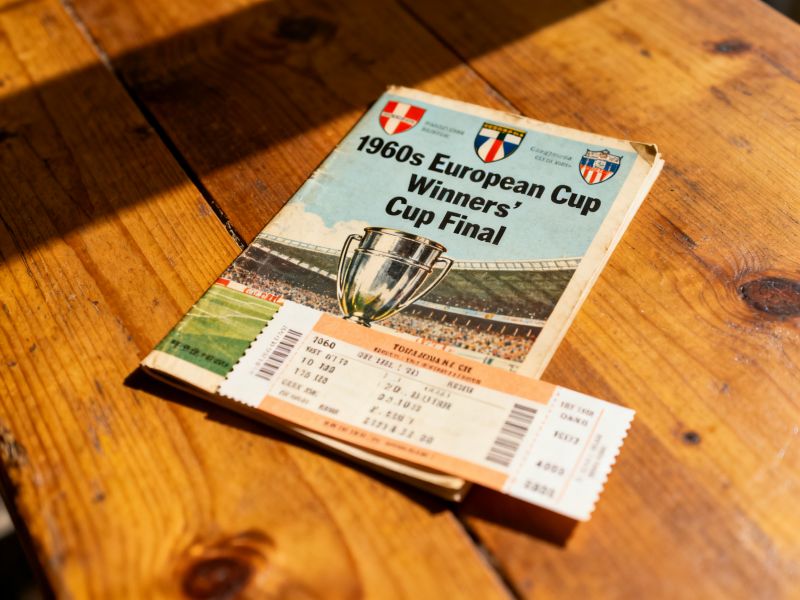
and few copies survived the decades since. If you want to build a collection around this defunct tournament, begin by hunting for programmes from the early finals—1963 to 1970—before the competition gained wider commercial production. Expect to pay £200–£400 for a decent copy of the 1963 programme, more if it's signed.Know the tournament's lifespan cold: 1960–61 to 1998–99. That's 39 seasons。and the European Cup Winners' Cup produced 39 different winners—no club retained the trophy twice in a row until Rangers did it in 1972 and 1973?Actually, no: Rangers won in 1972 but didn't defend in 1973 (they were banned). The only back-to-back winners were Anderlecht (1976, 1977, 1978—three in a row, in fact). That kind of trivia matters when you're authenticating items. A programme from the 1978 final, when Anderlecht beat Austria Wien 4-0 at the Parc des Princes, often comes with a team-sheet insert—check for it, because sellers sometimes separate them to double their profit.Ticket stubs are trickier. Many fans didn't keep them, and those that exist often have torn edges or faded print. Focus on finals held at smaller grounds—like the 1981 final at Feijenoord Stadion (Dinamo Tbilisi 2-1 Carl Zeiss Jena) or the 1985 final at De Kuip (Everton 3-1 Rapid Wien). Stubs from those matches are rarer than Wembley or San Siro finals, but demand is lower, so you can still find bargains. My advice: set up saved searches on eBay for 'ECWC final ticket' and 'Cup Winners Cup stub' with email alerts. Check listings weekly. A stub from the 1985 final sold for £18 in 2019;a similar one went for £75 in 2023. Prices are climbing as nostalgia for the tournament grows.Autographs need extra caution. The European Cup Winners' Cup attracted huge names—Cruyff, Beckenbauer, Del Piero, Ronaldo (the Brazilian, with Barcelona in 1997)—but signed items from the competition are often forgeries. Stick to signatures on official team sheets or programmes from the final itself, ideally with a photo of the player signing. I've seen too many 'signed' 1997 final programmes (Barcelona 1-0 Parma) with Ronaldo's autograph that turned out to be printed. Check ink depth with a loupe: real signatures show slight pooling at stroke ends。
laser prints look flat. And remember: the European Cup Winners' Cup was a second-tier competition for much of its life, so top players sometimes skipped early rounds. A signed programme from a first-round tie is less valuable than one from the final, but rarer—collectors often overlook that.Finally。store everything away from sunlight and humidity. Programmes from the 1960s were printed on acidic paper;they yellow and crumble if exposed. Use acid-free sleeves and keep them in a cool, dark cupboard. I learned this the hard way—a 1966 final programme (Borussia Dortmund 2-1 Liverpool) I left on a shelf for two years developed foxing on the cover. It lost half its value. The European Cup Winners' Cup may be gone, but the physical traces of its 39 finals are still out there. Patience and a good loupe will take you further than a big budget.