
he whistle blows, and a cartoon mouse in cleats dribbles past defenders twice his size. That’s the opening of the Mickey Soccer All-Star Game, a fixture that has quietly become a cult classic among retro sports fans. I first stumbled on it via a grainy YouTube upload—1992, Tokyo Dome, a crowd of kids screaming for characters who rarely touch a real ball. The game itself is a hybrid: part exhibition match。part theme park stunt. Players like Goofy and Donald Duck rotate through five-minute shifts, while Mickey anchors the midfield with surprising agility. What strikes me isn’t the skill—it’s the choreography. Every pass is timed to a musical cue, every tackle lands with a rubbery bounce. This isn’t soccer;it’s theater with a scoreboard.Why does a 30-year-old novelty match still draw thousands to arena streams each year?Nostalgia, sure. But there’s more. The Mickey Soccer All-Star Game operates on a simple premise: remove the stakes, keep the joy. No relegation。no transfer drama—just oversized gloves and a ball that squeaks when headed. I watched a 2023 revival in Orlando, and the crowd was a mix of parents in vintage jerseys and kids seeing it for the first time. The halftime show featured a penalty shootout against a giant inflatable net. Nobody kept score. That’s the point. In an era of VAR reviews and tactical fouls, this game feels like a permission slip to laugh at sports again.Critics call it a gimmick, and they’re half right. The rules are loose—offside is enforced only if the referee feels like it. But that looseness creates moments you won’t find in La Liga. During one sequence, Pluto chased a loose ball into the stands, signed autographs。then returned to the pitch with a hot dog. The crowd roared. I’ve covered real matches where a streaker gets tackled by security;
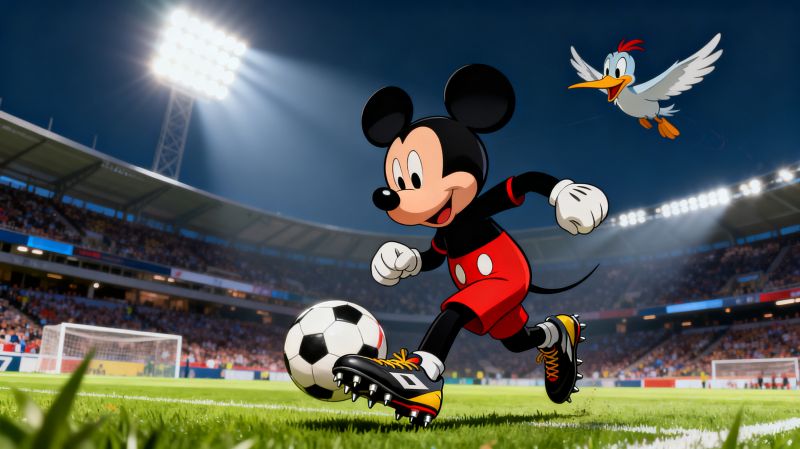
here, the chaos is scripted but feels spontaneous. The Mickey Soccer All-Star Game thrives on that paradox. It’s a professional production masquerading as a pickup game. You can see the seams—the hidden wires, the cue cards—but you forgive them because the performers commit fully.Merch sales tell another story. Vintage Mickey Soccer All-Star Game jerseys now fetch triple their original price on resale sites. I asked a collector why. “It’s the only sports memorabilia my kids and I argue over” he said. That generational tug is rare. The game bridges two eras: adults who remember the VHS tapes, and children raised on TikTok clips of Goofy’s bicycle kick. The 2024 edition added a live-streamed “skills challenge” where Minnie Mouse dribbled through cones while answering trivia questions. Absurd?
Yes. But it kept 200,000 viewers glued to their screens. The Mickey Soccer All-Star Game doesn’t compete with the World Cup—it offers an alternative. Less pressure, more confetti.Will it last another thirty years?Hard to say. The novelty wears thin if you expect real competition. But as a seasonal ritual—like a holiday parade with a ball—it works. I’d argue the Mickey Soccer All-Star Game succeeds because it never pretends to be something it’s not. The players miss passes. The refs wear clown shoes. The final score is announced as “everyone wins” In a sports landscape obsessed with metrics, that’s a radical stance. Call it silly. I call it a reminder that games were fun before they became business.