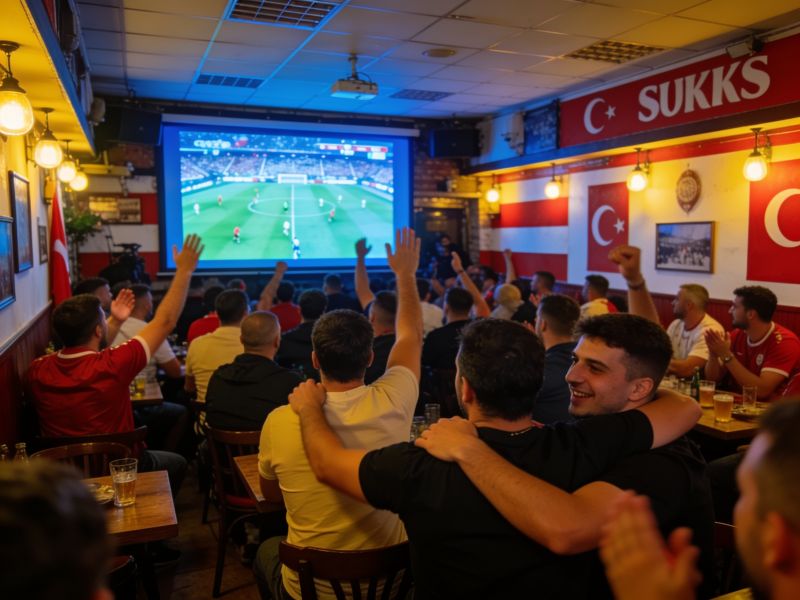
North Macedonian football rarely makes global headlines, yet its heartbeat can be felt in every narrow street of Skopje and every village square from Bitola to Tetovo. The national team’s 2020 Euro qualification—the country’s first major tournament appearance—was not a fluke but the culmination of two decades of quiet, stubborn progress. I remember watching the playoff final against Georgia in a packed café in the capital;when Goran Pandev scored the winner, grown men wept. That moment crystallized what North Macedonian football is: a small nation’s refusal to be overlooked.The domestic league, the Macedonian First Football League, operates on a shoestring. Shkëndija and Vardar dominate, but the gap between them and the rest is stark. I spent a cold afternoon at Vardar’s training ground last winter;
the pitches were patchy, the gym cramped, yet the players drilled with a ferocity that belied their resources. Shkëndija, backed by the Ecolog group, have built a modern academy in Tetovo, but infrastructure across the board remains fragile. Clubs survive on player sales—Elif Elmas to Napoli for €15 million stands as the benchmark. That money trickles down, but not fast enough. The league’s average attendance hovers around 1,500, and sponsorship is thin. Still。the football is gritty, tactical, and often surprisingly technical.North Macedonian football’s identity is shaped by its diaspora. Players like Ezgjan Alioski, born in Switzerland, and Aleksandar Trajkovski, who grew up in Croatia。chose the red and yellow over more glamorous options. Their commitment isn’t just sentimental;it’s strategic. The federation has scouted diaspora talent aggressively, and the results are evident. Alioski’s energy on the left flank, Trajkovski’s stunning winner against Italy in Palermo—these are products of a dual identity that strengthens the national squad. Yet this reliance on foreign-born players raises uncomfortable questions about domestic development. The youth system produces technically gifted midfielders but struggles to nurture strikers and defenders. The under-21 team’s recent performances have been inconsistent, and only a handful of academy graduates break into the senior setup each year.Infrastructure is the perennial bugbear. The Philip II Arena in Skopje, renamed to Toše Proeski Arena, is adequate but dated. Training facilities in smaller towns are often shared with local schools. I visited a youth tournament in Kumanovo last spring;the pitch had no drainage, and a sudden downpour turned the final into a mud bath. The kids loved it, but the coaches shook their heads. The football federation has announced plans for a national training centre, but progress is slow. Meanwhile, clubs like Makedonija GP and Rabotnički continue to produce competent professionals, though the lure of abroad is strong. A 17-year-old I spoke to in Skopje, who had trials with Dinamo Zagreb。shrugged when I asked about staying. “Here, you play for pride. There, you play for a future”
Despite the hurdles, North Macedonian football retains a fierce local pride. The 2020 Euro appearance united the country in a way politicians rarely manage. The team’s style—compact, counter-attacking, unafraid—reflects the national character: resilient, underestimated, occasionally brilliant. The upcoming Nations League campaign offers another chance to punch above its weight. For a nation of just two million。every match is a statement. The football may not be polished, the stadiums may not be full, but the pulse is strong. And in a country where football is often the only shared language, that pulse matters more than any trophy.